
Maggie 1
Maggie 3
the only girl I knew who wore Bloomers
From Crayons to Calculators - The Making of the Next Wise Guy
Kindergarten at St. Mary’s Elementary School. That first big step into the world beyond home. I still remember the thrill of arriving on day one, feet barely touching the floor, clutching a book bag that felt less like a school supply carrier and more like a pirate’s treasure chest.
Inside were the sacred tools of early academia: colored crayons arranged by importance (red was obviously the leader), a ruler that doubled as a sword in times of crisis, those black-and-white marble composition notebooks that made me feel like a real writer, and, of course, the metal lunchbox I’m certain mine had Hopalong Cassidy on it, and I’m certain it had to be filled with homemade goodies from Mom that would never make it past today’s modern school nutrition policy. If today’s standards had existed back then, my lunchbox would’ve been contraband.
Then there was my first teacher, Mrs. McCardell, a sweet, grandmotherly figure who radiated the calm authority of someone who had seen it all and graded it twice. Everyone I met later in life afterwards swore she had been their kindergarten teacher too, which only confirmed my childhood suspicion that she had been stationed in that classroom since the Bronze Age, maybe even teaching the alphabet to Moses.
But the real highlight of kindergarten wasn’t the crayons, the bus rides, or even the legendary Mrs. McCardell. It was “Karen” - my first love. Oh boy. I can’t fully explain how my Sicilian genes kicked in at age five, but they did. She was the one. The one I wanted to share my snacks with. The one I wanted to sit next to during story time. The one I was convinced I’d spend the rest of my school life with, right up until college, marriage, and possibly a small vineyard in Tuscany.
Looking back, she may also be the reason there was talk of holding me back from moving on to first grade. Apparently, staring dreamily at your future bride instead of your crayons does not count as academic achievement. “Who knew the grading system was so flawed?”
Still, kindergarten was the beginning of everything: school, friendships, first crushes, and the long, winding, occasionally ridiculous story that would become my life. Kindergarten didn’t just introduce me to education. It introduced me to the idea that life could be funny, unpredictable, and full of characters. And I was already one of them.
(1-5) Summers gone, kindergarten is over and its on to first grade. Same book bag, same lunchbox, only I think the picture on the lunchbox changed to Howdy Doody, and there was the same questionable haircut. But by all official standards, you’re older, wiser, and practically a seasoned academic. At least, that’s how it felt walking into first grade.
I carried forward everything I’d learned from kindergarten, especially the lessons involving Karen. In my mind, I had a whole year of experience under my belt, and I wasn’t about to waste time. Day one of first grade, I marched in with the confidence of a kid who thought he understood life, love, and the mysteries of the universe, and gave my first kiss outside of family to Karen in the Coat room. Let’s just say my enthusiasm outpaced my judgment.
I made a bold move, far bolder than a six-year-old should probably attempt and it earned me a full set of firsts: my first slap in the face, my first scolding away from home, my first trip to the principal’s office, my first public embarrassment. Shit, my mom always said I had the most kissable lips, I guess Karen didn't see it that way.
It was shortly after that I noticed Karen 's parents moved her to public school. Never understood why. My first realization was that maybe, just maybe, I still had a few things to learn about how the world works.
In hindsight, it was all worth it. Childhood is made of moments like big feelings, big mistakes, and big lessons wrapped in tiny bodies with oversize backpacks. And honestly, knowing myself, I’d probably find a way to do it all over again.
Those early elementary years were a mix of confidence, curiosity, and the kind of innocent mischief that shapes who you become. They were the beginning of learning not just reading and math, but how to navigate friendships, feelings, and the complicated social ecosystem of the school hallway.
“Elementary, my Good Watson”
(5-8) In case you were wondering, and for the record, Sherlock Holmes never actually said, “It’s elementary, my good Watson.” That famous line is one of those quotes the world collectively decided he must have said.
Like how people swear Darth Vader said, “Luke, I am your father,” or that everyone remembers “Hello, Clarice.” Holmes did say “Elementary,” and he did say “My dear Watson,” but never in the same breath.
The poor guy has been misquoted for over a century, which, if you ask me, is impressive for someone who never even existed. (Sorry, I may have taken the scenic route with this story.)
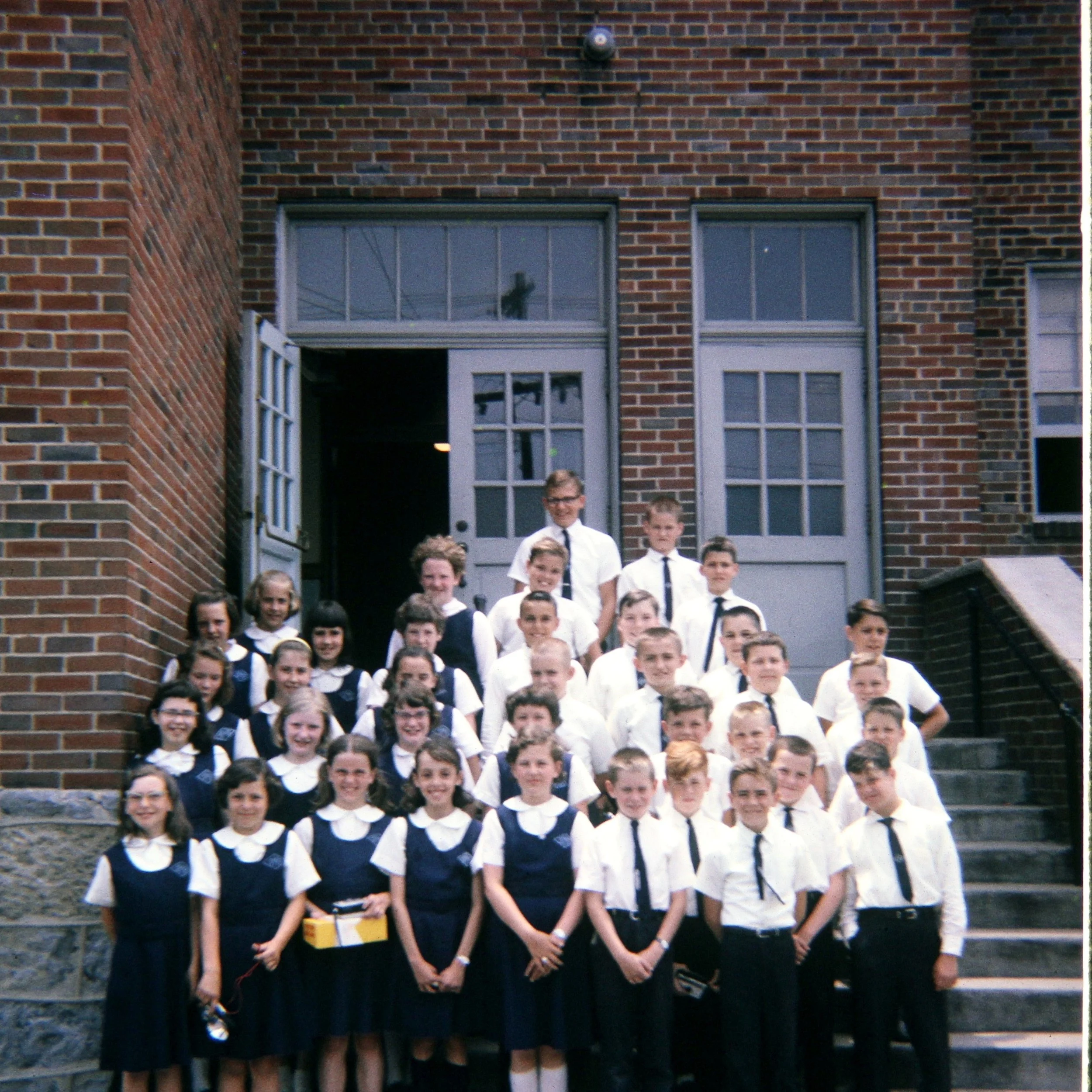
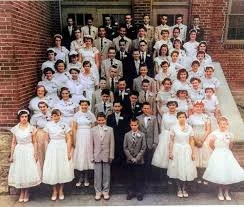
A lot happened between fifth and eighth grade at St. Mary’s Catholic School, a place where discipline was firm, uniforms were itchy, and the smell of Clorox in the bathroom and chalk dust made it memorable.
Those years were full of small adventures, big lessons, and the kind of memories that cling to you like the static from those polyester sweaters.
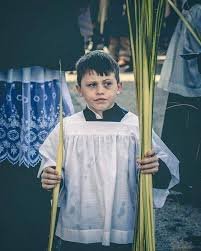
One of the biggest milestones was becoming an altar boy. In Catholic school terms, that was like getting promoted from “background character” to “supporting cast.” Suddenly, I wasn’t just another kid in a desk position; I was part of the morning Mass crew.
I learned most of the Latin responses, enough to sound holy even if I had no clue what I was saying. The best perk? Serving Mass meant skipping first period. While everyone else was conjugating verbs or suffering through long division, I was lighting candles and ringing bells like a tiny, devout stagehand.
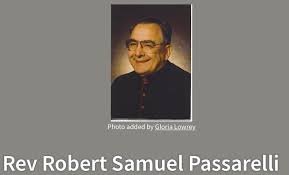
And then there was Father Passerelli, a kind man with a name that practically begged for a nickname. Naturally, we called him Father Pass the Jelly. Not to his face, of course; we weren’t suicidal. Little did we know he’d eventually become the Rev. Monsignor Robert Samuel Passerelli. My mom and Aunt Mary adored him and frequently consulted him about my behavior. I began to suspect my eternal fate was being negotiated behind closed doors.
The altar boy gig came with one undeniable perk: the post-Mass breakfast. After the service, we’d shuffle into the cafeteria for a warm cinnamon bun and a cup of hot chocolate, our humble payment for all that kneeling and genuflecting. It probably explains the condition of my knees today. Honestly, that alone made the job worth it. It felt like belonging to a secret society, one with pastries instead of passwords.
Of course, being altar boys, we also committed what felt like mortal sins at the time. Nothing dramatic, just the occasional sip of altar wine before school or a nibble of an unblessed host. In our young minds back then, it must have been an Ocean’s Eleven rebellion.
Looking back, it was harmless curiosity mixed with the thrill of doing something we absolutely weren’t supposed to do. I’m counting there is a statute of limitations on this type of mischief.
Those elementary years were a blend of faith, fun, and figuring out the world one small adventure at a time. They shaped my sense of humor, my sense of right and wrong, and my lifelong appreciation for a good cinnamon bun before 8 am.
A few other good things came along during those years, like somehow making the St. Mary’s basketball team. Picture this: a 4'2" kid in shorts that nearly brushed his ankles, dribbling a ball that bounced up to his ear. Ridiculous.
But I loved every second of it, and those early days ended up giving me the skills that would eventually land me the point guard spot in high school. Miracles did happen.
Then came my brief but glorious rock-and-roll era. Big stuff: I joined a band. We were talented enough to play the annual eighth-grade dance, at least in our own minds. Unfortunately, every song had to be approved by Father Passerelli. First casualty: The House of the Rising Sun. A tragedy. It was our best song by a mile.
So, we spent most of the night hammering out Wipe Out by The Surfaris. By the end of it, the drummer practically needed medical attention. But the crowd loved it, and for one night we felt like rock stars, or at least like kids who owned instruments.
It wouldn’t feel right to leave this stretch of my life without mentioning some of the rougher moments. For starters, there was Sister Charles, mean-spirited as a wet cat and twice as fast with a ruler. Hard to believe someone who committed to whacking knuckles was also committed to Christ.
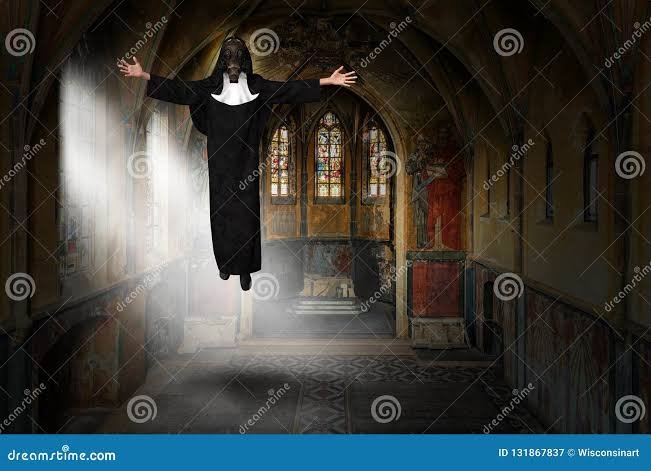
And the way those nuns moved down the hallway, gliding like they were on rails, never a footstep in sight. You’d swear they were equipped with early hovercraft technology.
And then there was the school favorite, Lonnie Fletcher, our resident bully. You could tell this guy skipped the chapter on Christianity entirely. Thanks to him, recess always felt like a scheduled appointment with pain.
One afternoon, he slammed me face-first into the Macadam playground, and I broke my front tooth. Nothing says “character building” like spitting out enamel while Sister Charles insists you “offer it up.” At least I had the rest of the afternoon off to go to the dentist.
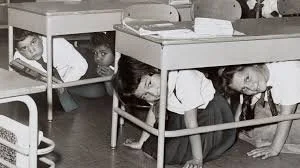
And then there was the other great cultural moment of our childhood: learning the fine art of ducking under our school desks in the event of an atomic bomb. As if a slab of plywood and a wad of chewing gum stuck underneath it were going to save us from nuclear annihilation. We took it seriously though, crouched down, hands over our necks, staring at the floor tiles and thinking, “Yep, this should do it.” Even at thirteen, we knew it was ridiculous, but we played along because the alternative was thinking too hard about the world blowing up.
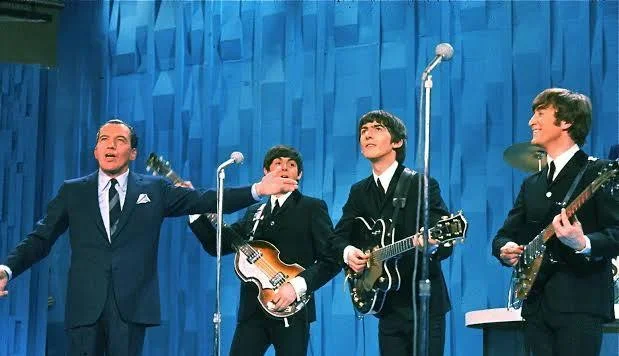
We loved The Ed Sullivan Show — that was our Sunday night Super Bowl. And nothing, absolutely nothing, prepared us for the moment the Beatles showed up. One minute, America was minding its business; the next minute, four guys with Mo-top haircuts were causing nationwide fainting spells. We watched them in eighth grade like we were witnessing the Second Coming, only with better music and tighter pants. Half the girls in class fell instantly in love, and half the boys suddenly wanted guitars.
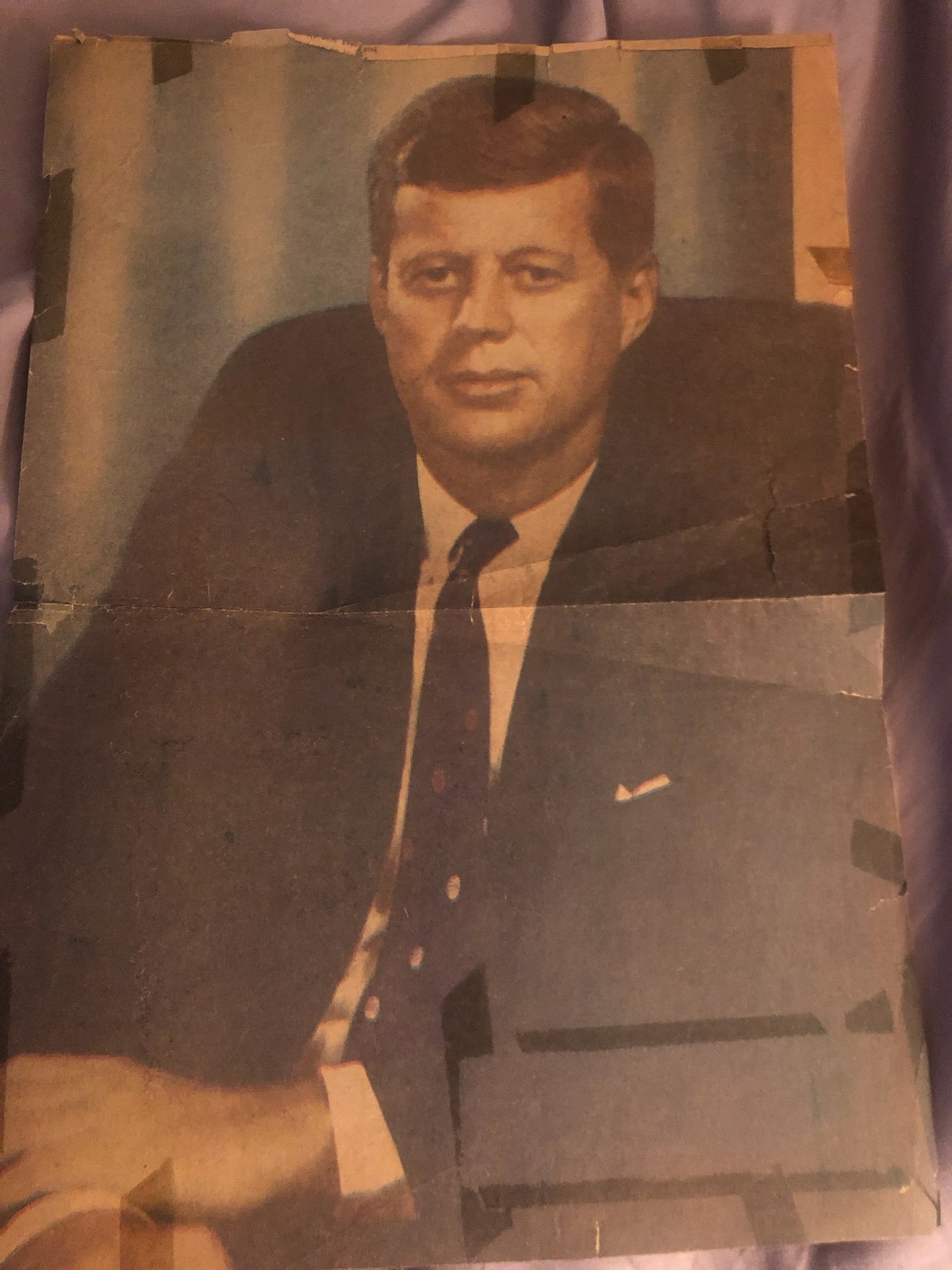
That year was a strange mix of Beatlemania, Cold War paranoia, and Catholic school discipline. A cocktail only the 1960s could have invented. Then, there was our struggle with the loss of John F. Kennedy.
We’d spent years lighting candles, ringing bells, dodging nuns, and perfecting the art of looking innocent while doing things that were not innocent. Surely that counted as leadership training. Surely the world, or at least the ninth grade, was ready for us.
By the end of eighth grade, freshly crowned Altar Boy of the Year, mind you, we were absolutely convinced that once summer ended, we were going to be big Shits. Not just regular shits. Big ones. The kind of legendary figures who would stroll into high school like we owned the place, radiating confidence, holiness, and maybe a faint smell of incense.
High school loomed ahead like the next great frontier. We imagined it as this magical land where we’d instantly grow six inches, develop jawlines, and finally understand algebra. A place where our reputations as altar boy elites would precede us, and people would whisper, “There they are… the chosen ones.”
In reality, we were still scrawny, awkward, and one bad haircut away from total collapse. But in our minds? Oh, we were unstoppable. Summer was our cocoon, and we were convinced we’d emerge in September as fully formed teenage gods.
High school was the next adventure — and we were ready to take it on with all the misplaced confidence of kids who had absolutely no idea what was coming.
“High School: The Prequel to the Chaos”
(9-12 ) Stepping into high school felt like crossing some invisible border where everything suddenly got louder, faster, and a whole lot more complicated. But what the hell, we figured we were in the big leagues now. At least that’s what we told ourselves while trying not to trip over our own feet.
First surprise: the School Sisters of Notre Dame did not vanish after St. Mary’s. Oh no. They multiplied. They floated through the halls like they were on wheels, but they were… different. They smiled. They laughed. They even cracked jokes. It was unsettling.
Then came freshman initiation, courtesy of the Seniors - a group of people who looked about thirty-five to us. They dressed us up, made us carry their books, walk on our knees, and eat mystery food blindfolded. They said it was spaghetti, but the texture suggested otherwise. Still, it was all in good fun and did a decent job of breaking the ice and our dignity while we adjusted to our new habitat.
Making the basketball team was huge. All those years dribbling a ball that bounced up to my ear finally paid off. I wasn’t the tallest, but I could move, and I could see the floor. Before long, I was running point, barking plays like I knew what I was doing. High-school locker rooms had a smell - sweat, rubber, popcorn, and nerves- and to this day, it hits me like a time machine. I even squeezed in soccer, competitive swimming, and diving. Apparently, I had more energy back then than common sense.
High school was the first time I felt like I had some say in who I was becoming. Not much, but enough to matter. Enough to start shaping the next version of myself.
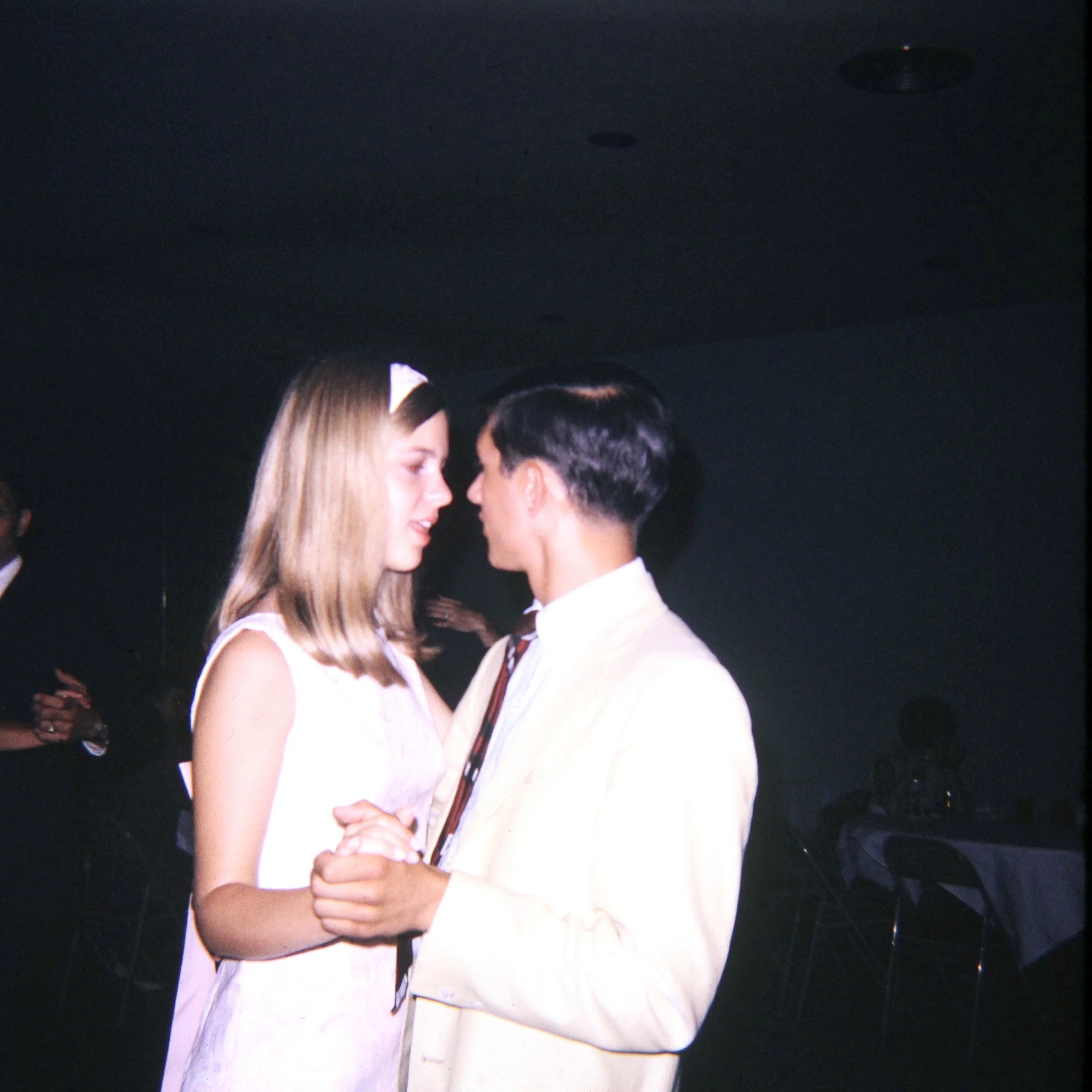
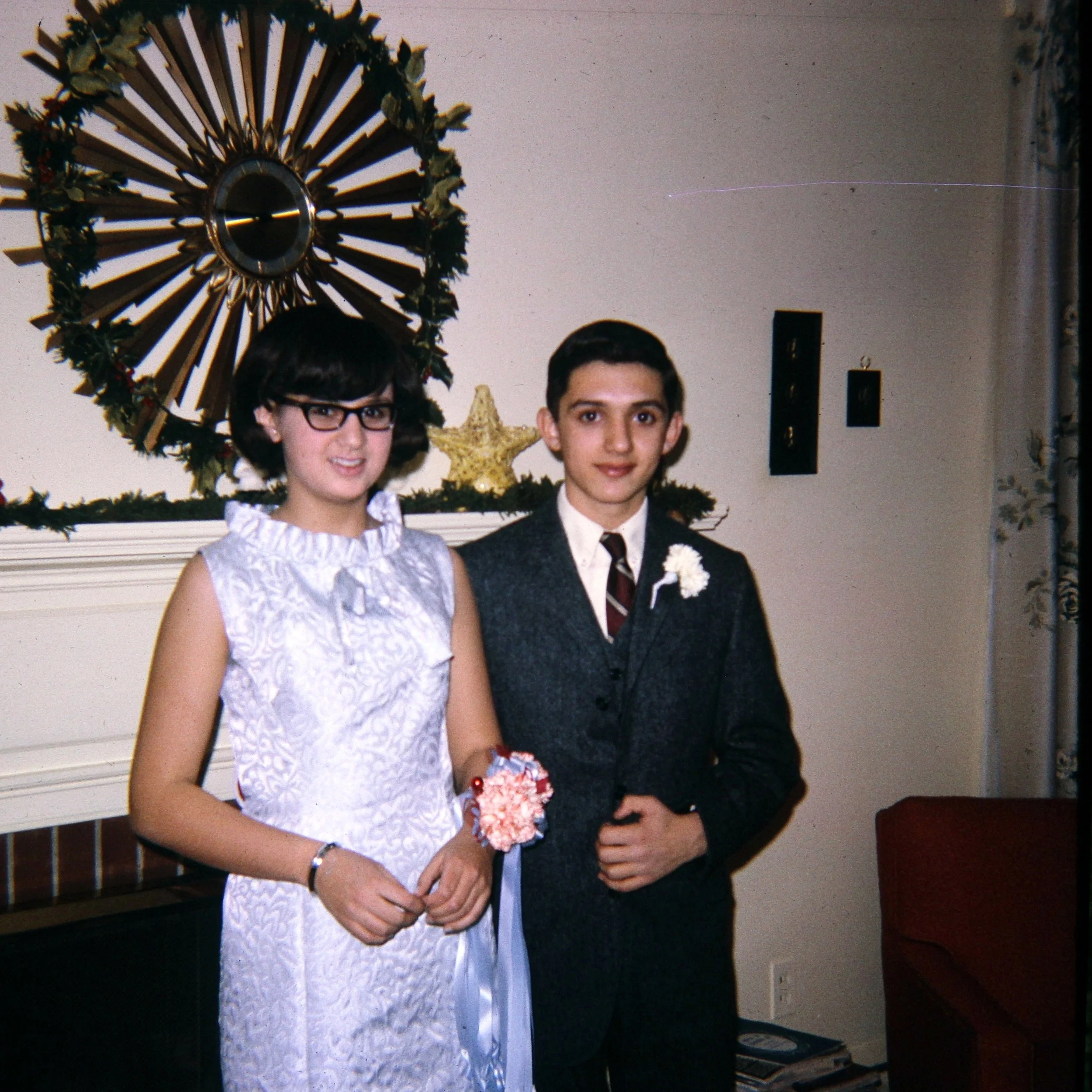
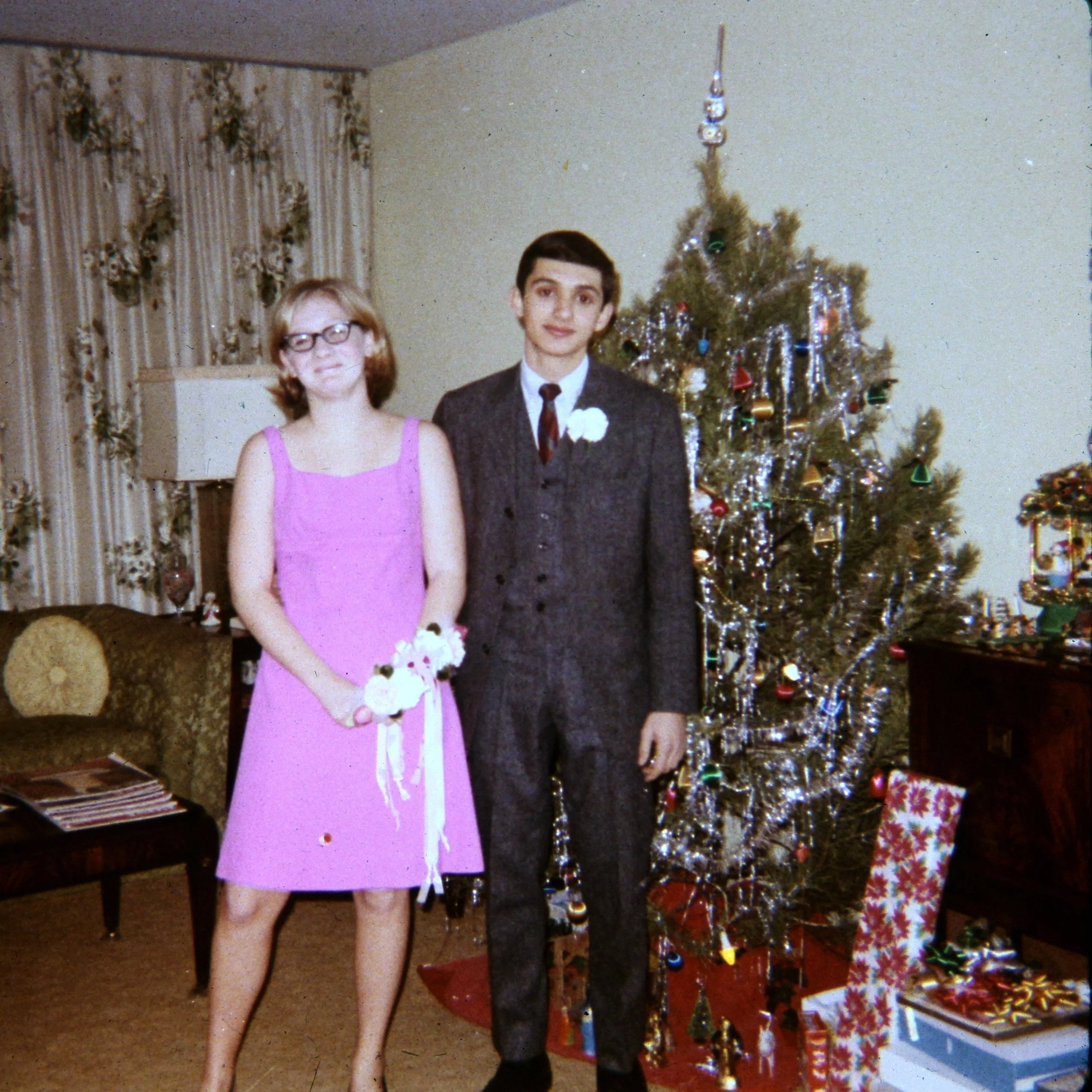
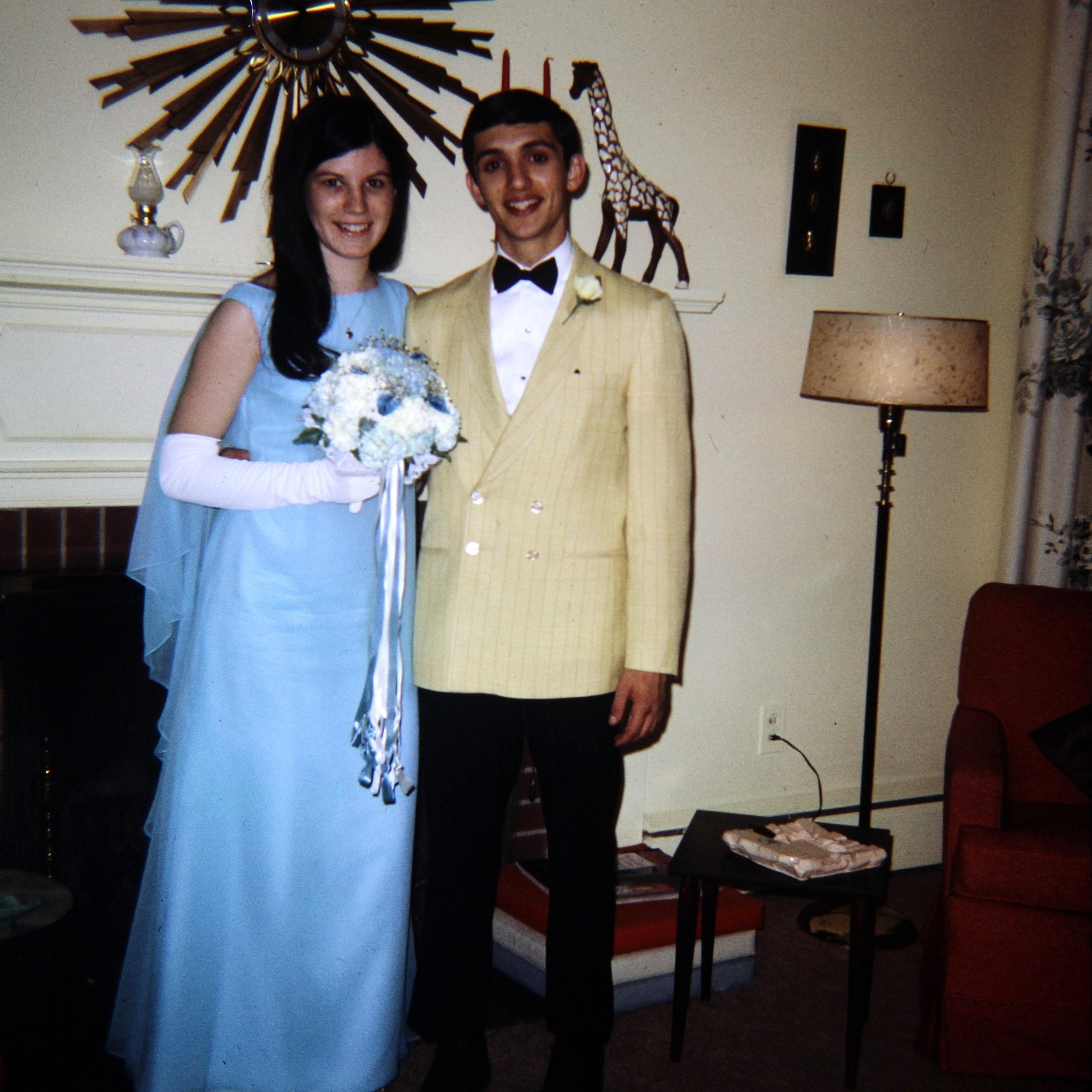
And of course, high school is when the new hormones kick in, and you suddenly realize there’s more out there than “Karen,” my kindergarten sweetheart. This was… different. As fate would have it, my first three girlfriends were all named Maggie. Maggie Nichols, Maggie Dwyer, and Maggie Felix.
After that streak, I moved on to Maria, whom I eventually married and have three wonderful children. (Who knew I liked M&Ms) 🤣 Then one day she came to her senses and threw me out. Life has a way of keeping you humble.
We pulled off some impressive stunts back then — like TP'ing the convent, the church, and the school in one glorious night. Hell, we even TP’d the cop car when they showed up.
But the best thing is when we hung the 4x8 plywood on the gym roof with “69” on it (our graduation year). The nuns and priests thought of a different meaning. You can guess what came next...... Mr. Fennel to the Principal’s Office now!
A trifecta of teenage stupidity. In Biology, we dissected frogs with all the enthusiasm of junior cannibals, and in Chemistry we learned the fine art of stink-bomb construction. Not exactly Nobel-level science, but it is unforgettable.
Somewhere along the way, we discovered beer, cigarettes, and cars, because every guy secretly wanted to be Ricky Nelson, Steve McQueen, or Fabian Forte rolled into one. Hell, we all wanted to be on American Bandstand. And yes, I was in love with Annette Funicello. She practically turned the Mickey Mouse Club PG-13 all by herself.
I continued playing music, bouncing between rock, Motown, and country bands. That’s how I made my money, and honestly, it beat mowing lawns, though I did that too, because guitars don’t pay for themselves.
You might find this shocking, but I almost didn’t graduate thanks to a failing grade in religion. One of the nuns flunked me because she said I participated in class too much (meaning I talked too much). Constantly challenging the thought, “If God knows everything…”
Apparently, nuns don’t appreciate being pushed on the finer points of predestination. By some divine mercy, or maybe just pity, the principal stepped in at the last minute and cleared me to wear the cap and gown.
If you’re wondering, no, I wasn’t valedictorian or salutatorian. No special awards either. But considering I’d been an altar boy, I figured I might at least get one of those Latin honors sum-ma-cum something. Turns out the only thing I graduated cum laude in was getting into trouble.
There’s something about looking back over a lifetime, all the places you’ve been, the people you’ve loved, the mistakes you’ve made, the victories you earned, that makes certain chapters stand out more than others.
And for me, no matter how many years have passed or how much life has thrown my way, the days in high school still rise to the top as some of the best of my young adulthood.
It wasn’t perfect, of course. Nothing ever is. But there was a kind of raw honesty to those years, the bands, the sports, the friendships, the first real taste of love, the challenges that felt enormous at the time.
Somewhere between ninth and twelfth grade, something shifts inside you. You don’t notice it happening day by day, but you start to mature, just a little. You begin to understand the world in a way you didn’t before. You start to see your parents not as the enemy, but as people who were trying, sometimes desperately, to steer you in the right direction.
High school is where you first feel the weight of your own choices. It’s where you learn what you’re good at, what you’re terrible at, and who you want to be when no one’s watching. It’s where you get knocked down and figure out how to stand back up. It’s where you discover that the world is bigger than your neighborhood, but also that the people around you matter more than you realized.
Those years weren’t just a bridge between childhood and adulthood. They were the forge. The place where the heat, the pressure, the excitement, and the uncertainty all came together and shaped you into someone new. And even now, after everything life had shown me, those days still glow a little brighter in the rear-view mirror.
“The Lost Years”
After high school, most of my classmates went off to real colleges. You know, places with dorms, libraries, and people who read the syllabus. And me? I spent the next 18 months in what scientists call “a fog.” Not even a cool fog.
I enrolled in the local junior college and signed up for business administration. Because nothing says “I have no idea what I’m doing” like choosing the major that’s basically the human equivalent of beige paint.
Although later in life, people saw that I was confident in bookkeeping, accounting, and project management, I have no clue how I was able to pick that up. Not from Jr. college, trust me.
I don’t remember a single lecture. Not one. What I do remember is playing table tennis like it was my full-time job. I played so much ping pong that my eyes started to slant, and I’m pretty sure I developed tennis elbow in both arms. I could slam a ball from forty feet behind the table. Okay, maybe twenty, fine, five. But emotionally? Forty. Occasionally, I’d show up for Phys Ed just to keep my student ID from expiring.
Eventually, I realized something terrifying: if I stayed on this path, I was going to end up with a bachelor’s degree I’d have to hide from my dad like it was a forged passport. I’d be sliding report cards under his dinner plate like, “Don’t worry about that C minus, just focus on those mashed potatoes.”
So, I go to him one day and say, “Dad… I think you should let me attend the University of Hawaii to study photography.” Photography! Because at the time I was obsessed with National Geographic. I just knew, absolutely knew, that if I went, I’d end up working for them. Traveling the world. Taking iconic photos. Maybe even going back to Bermuda to photograph the beaches. You know… for journalism.
This dream lasted exactly 0.3 seconds. I barely got the word “Hawaii” out before my dad shut it down so fast the windows rattled. The man rejected my future like it was a timeshare presentation. I walked away thinking, “Well… back to table tennis.”, or “pingpang qiu” as pronounced in China.
Maggie 2
Maria 1